

Anthropic Circulates Draft AI Bill Requiring Court Order to Block Models
A confidential legislative draft from Anthropic would require federal agencies to prove an AI model risks 50 deaths or $1 billion in damage before blocking its release.

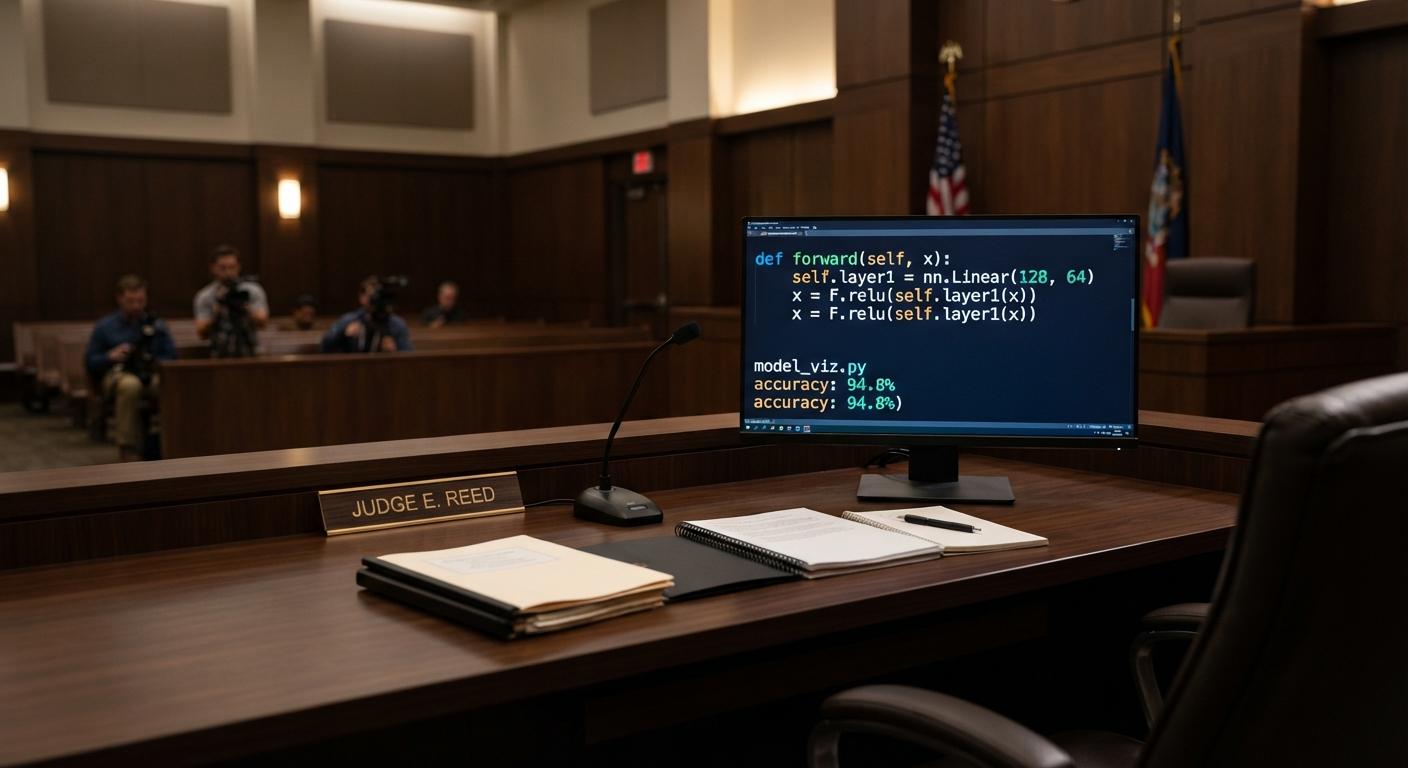
Anthropic has circulated confidential draft legislation to U.S. lawmakers proposing strict federal limits on when regulators can block the release of advanced artificial intelligence models. First reported by Politico, the proposal would require federal authorities to meet high evidentiary bars in court before halting any model deployment.
Strict Damage and Casualty Thresholds
Under the draft measure, the federal government could only block or suspend a frontier model if it presents a foreseeable, imminent risk of killing or seriously injuring more than 50 people, or causing over $1 billion in economic or property damage. The intervention authority is restricted to three catastrophic scenarios: the creation or release of biological weapons, a model evading its developer's control, or cyberattacks.
Court Injunctions and Agency Limits
The draft bill designates the Department of Commerce as the sole federal agency permitted to seek a deployment halt, barring all other departments from intervening. Commerce officials would also be barred from unilateral emergency shutdowns. To block a model, the agency would need to obtain an injunction from a federal judge in the U.S. District Court for the District of Columbia under a preponderance of the evidence standard.
Evaluator Mandates and State Preemption
The proposal requires frontier developers to submit models to periodic evaluations by independent third parties registered with the Commerce Department. Developers would be allowed to pay these evaluators directly, provided the fees are not contingent on audit results. Evaluators would be required to alert the Commerce Department within 72 hours of discovering any qualifying imminent danger. Drawing framework language from California measures such as SB 53, the proposal would also override certain state-level AI regulations.
Criticism Over High Standards for Oversight
AI safety advocates have pushed back against the draft, arguing that casualty and monetary thresholds set an impractical bar while ignoring widespread harms such as algorithmic fraud. Sneha Revanur, founder and president of Encode Action, criticized the proposal as self-serving, stating that the government should retain emergency options without needing to prove whether 50 people or 49 will die. An Anthropic spokesperson defended the outreach, stating the draft reflects principles from the company's Advanced AI Framework, which it has shared with lawmakers since June 2026.
I’m a techie & gamer turned SEO strategist with a genuine passion for technology, AI, science, and gaming. I love exploring new technology, following the latest developments, and looking beyond the headlines to understand what is really happening. I write about the latest tech news, trends, products, tools, and ideas shaping our digital world. What I share is not just news. My articles include my own views, observations, and practical experiences, written in a simple and useful way. At Penguin Lens, I enjoy sharing what I discover, what I think, and what I believe readers should know, with the goal of making technology easier to understand and more interesting to explore.

Why the robotics industry is still waiting for its ChatGPT moment
More in AI
 AI
India Issues Critical Warning After AI Agents Breach Live Corporate Systems
 AI
Meta Releases 816B Muse Spark Open Model Tuned for Apple Silicon Desktops
 AI
Ricursive Intelligence bets on AI-designed silicon to tackle compute crisis
 AI