

Ricursive Intelligence bets on AI-designed silicon to tackle compute crisis
Founded by the creators of AlphaChip, the startup claims its AI platform can compress semiconductor design cycles from years to a single week.

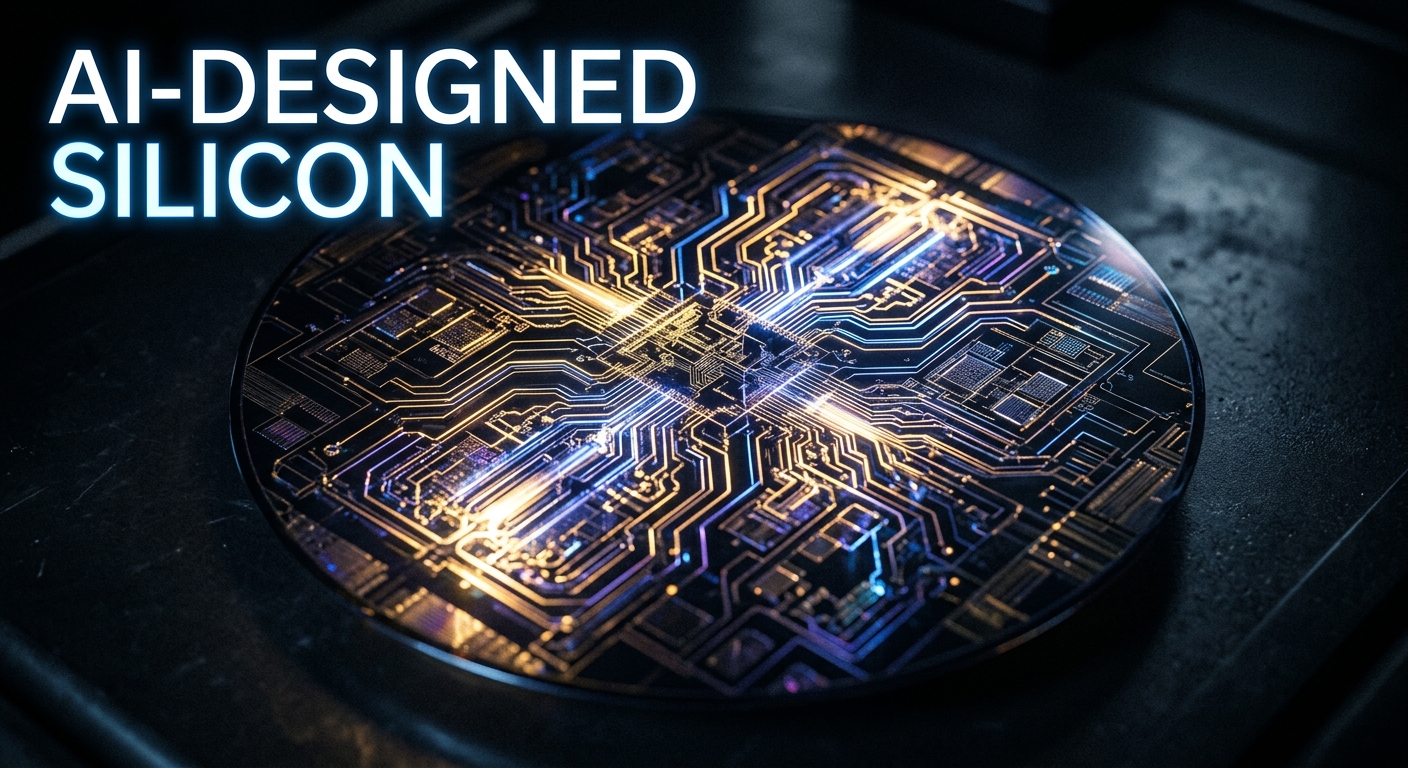
Ricursive Intelligence is betting that the path to future computing power lies in letting AI design the hardware itself. At TechCrunch Disrupt 2026 in San Francisco, co-founders Dr. Anna Goldie and Dr. Azalia Mirhoseini presented an approach to overhaul the semiconductor industry, which they argue is currently bottlenecked by manual design cycles lasting up to three years.
The startup, which has raised $335 million at a $4 billion valuation, is building on AlphaChip. Developed by Goldie and Mirhoseini during their time at Google Brain and DeepMind, that reinforcement learning framework was previously used to optimize the layout of four generations of Google's Tensor Processing Units.
Traditional physical chip design relies on Electronic Design Automation (EDA) tools that require engineers to partition chips into isolated blocks, a process that is slow and labor-intensive. Ricursive claims its platform bypasses these limitations by optimizing the entire chip as a single continuous space. This method allows for non-intuitive geometries such as circular and wave patterns that standard tools cannot easily produce.
Compressing design cycles to one week
Ricursive is positioning its technology to enable what it calls a designless shift in the industry. By automating layout generation, the company aims to reduce the design cycle from months or years to roughly one week. The founders believe this will lower barriers for non-semiconductor companies, making custom silicon viable for specialized areas like augmented reality, space exploration, and computational biology.
The urgency behind this effort stems from expected hardware constraints. According to Goldie, global compute capacity demand will increase by at least 10,000-fold over the next five years. The founders argue that attempting to meet this demand by building 10,000 times more data centers is physically and environmentally unfeasible, making architectural efficiency mandatory.
Verification hurdles and commercial timeline
Significant questions remain regarding the real-world application of Ricursive's automated design suite. It remains unproven whether the whole-chip AI generation can pass tape-out, formal verification, and physical design rule checks on advanced foundry process nodes without manual human intervention. The startup has not provided a specific commercial release date for its platform or the tape-out of its first custom silicon.
Ricursive's roadmap outlines three phases: accelerating existing EDA tasks, operating a platform for third-party custom chip design, and pursuing vertical integration into proprietary hardware and foundation models. Investors backing the company include Sequoia Capital, Lightspeed Venture Partners, DST Global, and Nvidia's venture capital arm, NVentures.
I’m a techie & gamer turned SEO strategist with a genuine passion for technology, AI, science, and gaming. I love exploring new technology, following the latest developments, and looking beyond the headlines to understand what is really happening. I write about the latest tech news, trends, products, tools, and ideas shaping our digital world. What I share is not just news. My articles include my own views, observations, and practical experiences, written in a simple and useful way. At Penguin Lens, I enjoy sharing what I discover, what I think, and what I believe readers should know, with the goal of making technology easier to understand and more interesting to explore.

Big Tech Drops Data Center NDAs as Local Opposition Multiplies
More in AI
 AI
AIMicrosoft CEO Satya Nadella Calls for AI 'Emergency Brake' and Zero-Trust Model Controls
 AI
AIWhy Did OpenAI Just Oust Three Top Safety Researchers?
 AI
AIGoogle Opens SynthID Detector to the Public Globally
 AI
AI