

Why the 2026 Midterms Are Turning Into a Referendum on AI Data Centers
With voters angry over rising electric bills and strained power grids, upcoming gubernatorial and congressional races threaten to slow the tech sector's $2 trillion infrastructure buildout.

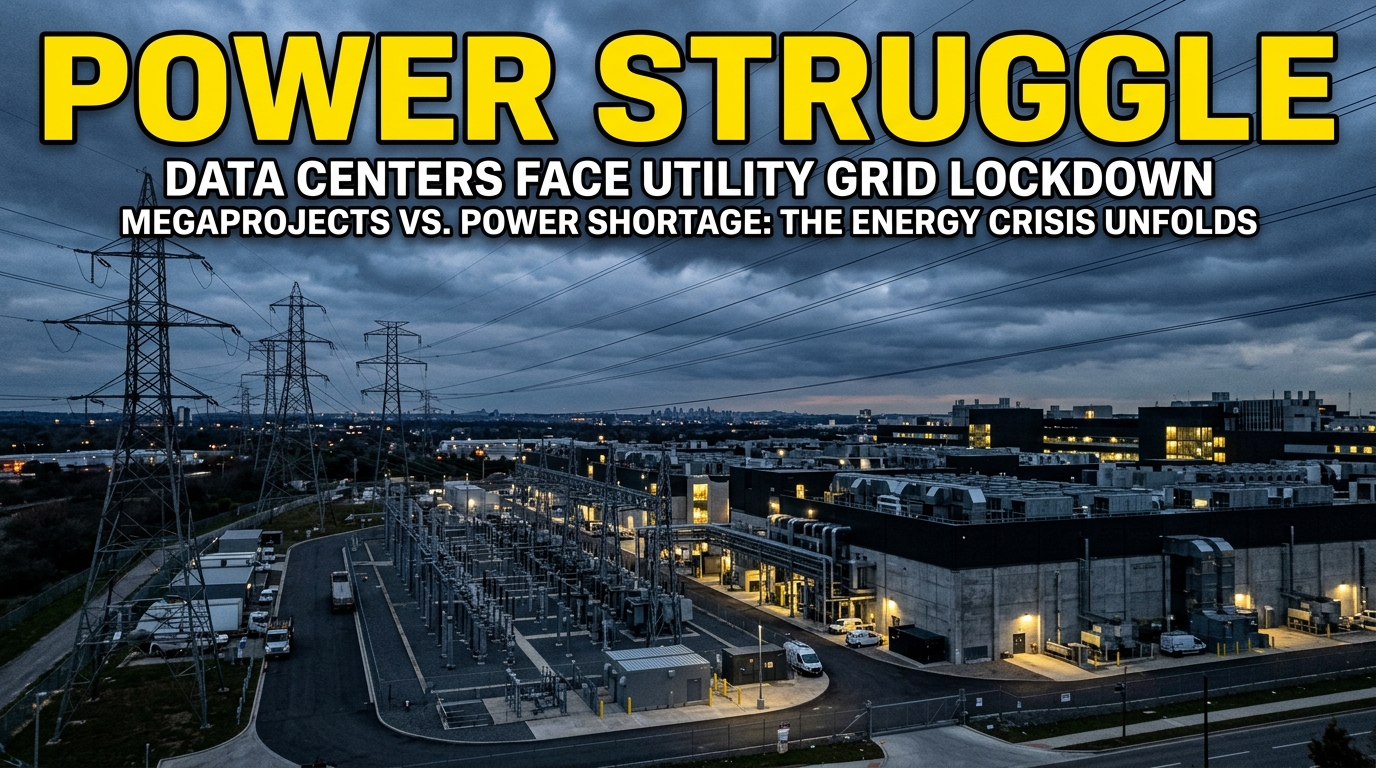
Voter anger over surging household electric bills and strained power grids has turned the tech industry's artificial intelligence buildout into one of the most volatile issues on the 2026 midterm ballot. Candidates across both major parties are adjusting their campaigns, with some backing local moratoriums and others disavowing tax incentives once celebrated as economic windfalls.
As WIRED reported on October 11, candidates across the United States are competing to present themselves as the most aggressive critics of data centers. What began as localized zoning disputes over noise, water consumption, and disappearing farmland has escalated into an electoral liability for incumbents who championed tech investment.
The Ohio Battleground and the Ratepayer Rebellion
The political risks are clearest in Ohio, a state that hosts 154 operational data centers, with 27 under construction and 57 planned. At the same time, local communities have enacted 138 moratoriums against new facilities, according to data tracked by the Ohio Consumer Counsel and industry groups.
The issue has landed squarely in Ohio's competitive U.S. Senate race between incumbent Republican Senator Jon Husted and Democratic challenger Sherrod Brown. A leaked National Republican Senatorial Committee memo described the facilities as a severe political vulnerability, warning that "more than any other thing in this race, data centers are the anchor hanging around Husted's neck." The memo added that "if he loses and data centers get the blame, politicians across the country will take notice and they will not go near the next one."
Donald Trump attempted to shore up Husted during an October 3 rally in Vandalia, Ohio, making an explicit pitch for the facilities despite local discontent. "Look, there's so much money to be made for Ohio. You can't just turn them off. They'll go to China," Trump told the crowd, framing the buildout as essential to national artificial intelligence dominance.
Grid Strain Outweighs Washington Action
Voter skepticism extends well beyond Ohio. Polling cited in a Brookings Institution analysis found that 64 percent of Americans view rapid data center expansion unfavorably, while 77 percent worry that the facilities will raise their home electricity costs. Only 14 percent of respondents expressed willingness to live near a facility.
Federal lawmakers have struggled to pass binding rules. On September 16, the U.S. House of Representatives passed the bipartisan Ratepayer Protection Act by a 417 to 3 vote to shield residential utility customers from paying for transmission upgrades demanded by commercial tech hubs.
The bill stalled in the U.S. Senate on September 30, failing to clear a procedural hurdle in a 57 to 32 vote. While supporters like Husted argued the measure would protect consumers, Senate Democrats labeled the compromise toothless because it merely instructed state regulators to consider new standards rather than establishing binding requirements.
State Governors Hold the Real Authority
With federal legislation stalled, attention has shifted to statehouses. An analysis published on October 7 by Michael Thomas on Distilled highlighted that gubernatorial races, rather than congressional contests, will likely dictate the immediate future of the tech sector's projected $2 trillion infrastructure pipeline.
Ten closely contested gubernatorial races will determine regulatory authority over 67.4 gigawatts of proposed data center capacity. That volume exceeds the 62.7 gigawatts of total data center capacity currently operating nationwide. In addition, 20 competitive House districts feature large-scale facility proposals.
Precedents for executive intervention already exist. Texas Governor Greg Abbott ordered a pause on new approvals in August 2026 after regional grid operators warned about supply margins during peak heatwaves. An analysis by RTO Insider noted that midterm election outcomes across state regulatory jurisdictions could substantially slow deployment schedules across regional power markets.
Utility Regulators and Tech Capital Budgets
Technology companies have committed historic capital spending toward computing infrastructure, assuming state utilities and regional transmission organizations could accommodate massive electrical loads. The sudden shift in electoral sentiment threatens those timelines.
If incoming governors appoint utility regulators skeptical of tech subsidies, companies could face mandatory delays, higher connection tariffs, or site cancellations. What tech executives viewed as a race against global competitors has encountered resistance from local ratepayers unwilling to fund grid upgrades through monthly electric bills.
The November 3 Test for Campaign Pledges
Voters cast their ballots on November 3. The immediate question is whether candidates who campaigned on anti-data-center platforms will carry out statutory moratoriums and strip existing tax credits once in office, or whether they will settle for revised power-purchase agreements that shift grid infrastructure costs directly onto tech balance sheets.
I’m a techie & gamer turned SEO strategist with a genuine passion for technology, AI, science, and gaming. I love exploring new technology, following the latest developments, and looking beyond the headlines to understand what is really happening. I write about the latest tech news, trends, products, tools, and ideas shaping our digital world. What I share is not just news. My articles include my own views, observations, and practical experiences, written in a simple and useful way. At Penguin Lens, I enjoy sharing what I discover, what I think, and what I believe readers should know, with the goal of making technology easier to understand and more interesting to explore.

Google Playground Lets Anyone Prompt a Game into Existence, But Early Results Lean Toward Slop
More in Tech
 Tech
TechMicrosoft Targets MacBook Pro With $2,599 Nvidia-Powered Surface Laptop Ultra
 Tech
TechTouchscreen MacBook Pro Planned for Fall Launch With Lighter Chassis, Gurman Reports
 Tech
TechCalifornia Signs Law Fining Robotaxis That Block Emergency Crews
 Tech
Tech