

Restoring UBE2N Enzyme Reduces Damage in Advanced Fatty Liver Models
Cedars-Sinai researchers found that replenishing the enzyme UBE2N reduced fat buildup, inflammation, and scarring in laboratory mouse models of steatotic liver disease.

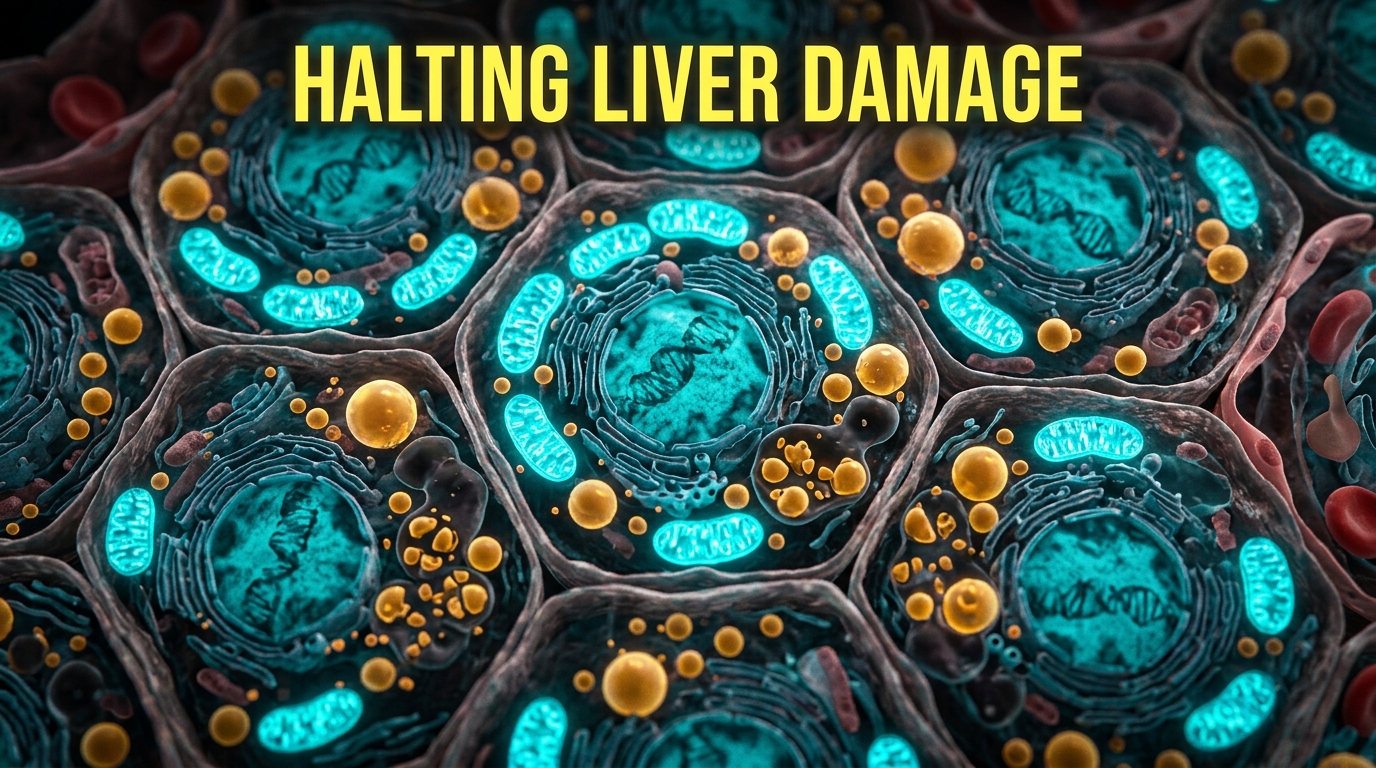
A decline in a cellular maintenance enzyme plays a central role in driving common fatty liver toward severe, scarring disease. In a preclinical study published in the journal Nature Metabolism, researchers co-led by Cedars-Sinai Health Sciences University found that restoring the enzyme UBE2N to normal levels reduced fat accumulation, inflammation, and scarring in laboratory mouse models.
Metabolic dysfunction-associated steatotic liver disease (MASLD), previously known as nonalcoholic fatty liver disease (NAFLD), affects an estimated 100 million people in the United States, according to the American Liver Foundation. The organization also estimates that roughly 20% to 25% of individuals with MASLD progress to metabolic dysfunction-associated steatohepatitis (MASH), a condition characterized by chronic inflammation and tissue damage.
How UBE2N Operates in Liver Cells
The study, titled "UBE2N deficiency contributes to MASH development via p62-regulated mitophagy and PANoptosis," examined cellular mechanics as steatotic liver disease advances. Researchers observed that levels of UBE2N steadily dropped as the disease progressed.
In liver cells, UBE2N supports the breakdown of fat and assists in the removal of damaged mitochondria through a recycling mechanism known as mitophagy. When UBE2N drops, impaired mitochondria accumulate, prompting PANoptosis, an inflammatory programmed cell death pathway.
"The UBE2N enzyme appears to protect the liver from the inflammation and damage associated with MASH by helping remove damaged mitochondria and supporting the breakdown of fat," said Ekihiro Seki, MD, PhD, professor of Medicine and Biomedical Sciences at Cedars-Sinai and co-corresponding author of the study. "When levels of the enzyme fell, we saw more damaged cells and injury to the liver."
Preclinical Findings and Clinical Outlook
In mouse models, replenishing UBE2N to standard levels prevented the escalation to MASH, curbing fat accumulation, inflammation, and fibrous scar tissue in the liver.
"The identification of this enzyme's role in regulating mitochondria in the liver is an important advance in understanding steatotic liver disease," said Shelly Lu, MD, Women's Guild Chair in Gastroenterology and director of the Karsh Division of Gastroenterology and Hepatology at Cedars-Sinai. "Future studies can test whether enhancing this protective pathway can complement existing treatments, identify patients most likely to benefit and lead to new therapeutic approaches for preventing advanced disease."
Whether upregulating the UBE2N pathway in humans can safely prevent or reverse liver damage remains unverified in clinical trials. Future research is required to evaluate safety, assess potential complementary effects with existing treatments, and determine which patient groups might benefit.
I’m a techie & gamer turned SEO strategist with a genuine passion for technology, AI, science, and gaming. I love exploring new technology, following the latest developments, and looking beyond the headlines to understand what is really happening. I write about the latest tech news, trends, products, tools, and ideas shaping our digital world. What I share is not just news. My articles include my own views, observations, and practical experiences, written in a simple and useful way. At Penguin Lens, I enjoy sharing what I discover, what I think, and what I believe readers should know, with the goal of making technology easier to understand and more interesting to explore.

Scientists Discover Hidden Giant Stick Insect Species Camouflaged for Decades
More in Science & Future
 Science & Future
How a Giant Australian Stick Insect Fooled Scientists for Decades
 Science & Future
Diabetes Study Warning: Why Perfect Blood Sugar Might Actually Harm You
 Science & Future
Why Perfectly Flat Blood Sugar Might Be Dangerous: Shocking Diabetes Study
 Science & Future