

Forget App Downloads: The AI Agents Moving Into Your Text Messages
A growing roster of conversational AI agents can now order takeout, restock groceries, and coordinate household schedules directly inside SMS and iMessage.

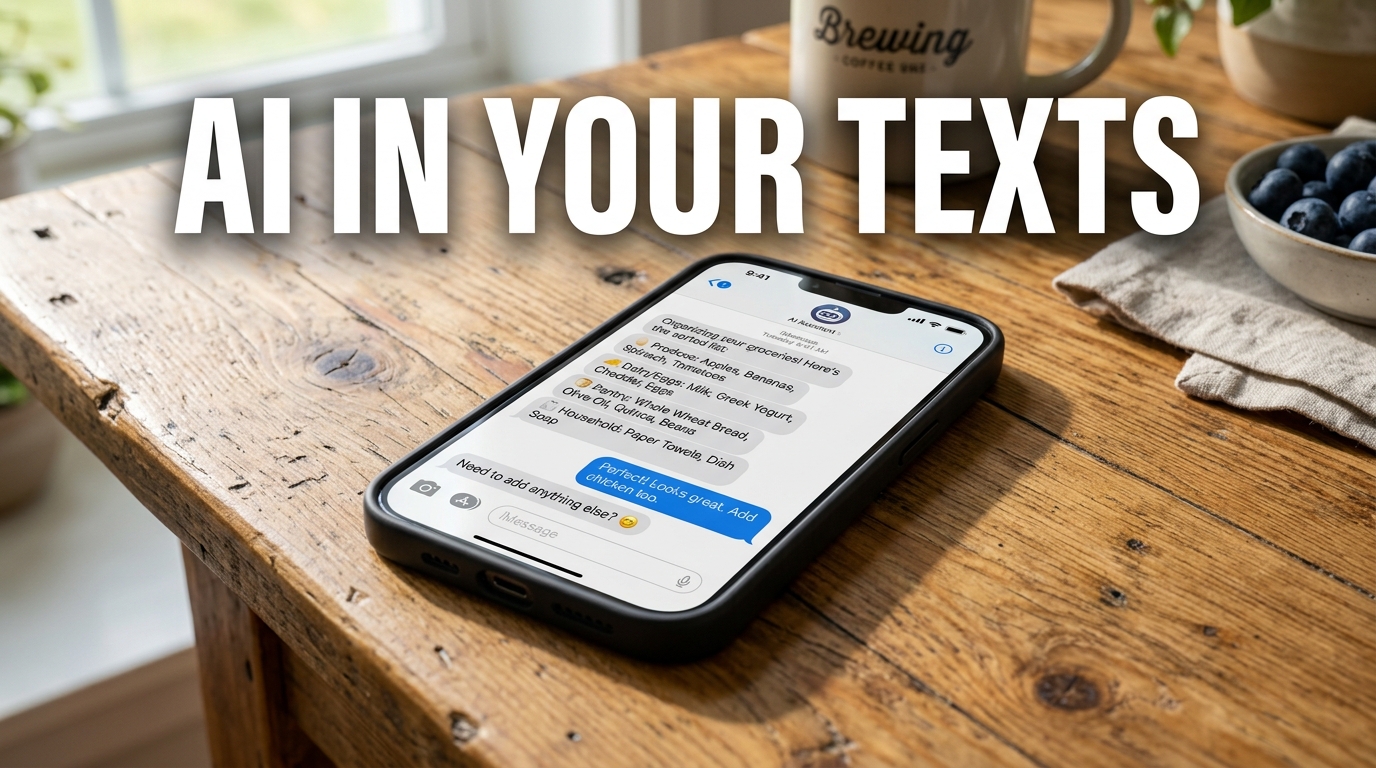
A shift is underway in mobile software: autonomous AI agents are moving out of standalone apps and directly into text messaging threads. Rather than requiring users to install new software or switch between multiple home screen apps, developers and platforms are treating native messaging services like Apple Messages, SMS, and WhatsApp as the primary interface.
An industry roundup published by TechCrunch on October 3 highlights how conversational AI is expanding beyond basic customer support bots. Today, text-based agents handle household management, grocery shopping, travel planning, and workplace coordination inside standard chat conversations.
How Text-Based AI Agents Operate
Instead of relying on a dedicated graphical interface, messaging agents use phone number identity and natural language processing. When a user texts a designated number or contact, the request routes to an agent running on external infrastructure. Because the phone number links to an existing user profile, the agent can access saved payment methods, delivery addresses, and preferences without requiring repeated logins.
Infrastructure startups are building the routing layers to support these interactions across multiple protocols. Photon, which raised a $4.5 million seed round co-led by Gradient Ventures and A* in early October, helps developers deploy agents across iMessage, SMS, RCS, WhatsApp, and email. The company reported more than 40,000 developer sign-ups, noting that 98 percent of its usage remains on its open-source framework, while its enterprise-hosted tier achieved tenfold revenue growth over four months.
What Messaging Agents Do Today
Several consumer deployments show how text-driven agents function in practice:
- Food and grocery ordering: At its Dash Forward 2026 event on September 30, DoorDash introduced an AI agent that operates inside Apple's Messages app. The agent searches across more than 800,000 menu items and grocery products in the United States. Users can text dietary restrictions for group orders or send a photo of an empty refrigerator, which the agent evaluates to assemble a digital grocery cart.
- Household coordination: On September 17, Google expanded its Google CC agent into a shared household coordinator. The system supports up to six adult family members, allowing them to manage group calendars, update shared task lists, and track reminders within a single conversation thread.
- Merchant discovery: Conversational shopping is already influencing consumer habits. DoorDash reported that in the three months following the rollout of its conversational assistant features, users discovered more than 40,000 new restaurants, with nearly half of those orders going to venues customers had not previously ordered from.
Platform executives view this as a potential transition away from conventional app stores. "We believe agents are a new app paradigm," DoorDash co-founder Andy Fang said during the rollout. DoorDash CEO Tony Xu noted that consumers care primarily about fast, low-friction execution rather than software taxonomy.
Early Growing Pains and Trade-Offs
Conducting complex transactions entirely through text comes with measurable trade-offs.
Conversational workflows are not always faster. While proponents argue that texting eliminates app navigation friction, critics point out that typing prompts back and forth to refine an order can require more effort than tapping a saved reorder shortcut in an existing app.
Reliability also remains a hurdle. Testing by Bloomberg on an early build of DoorDash's text agent revealed that the system occasionally returned incorrect item photos and quoted prices that differed from the main app. DoorDash said users admitted from its public waitlist will interact with an updated model intended to address those pricing discrepancies.
Access also remains limited. DoorDash's text-ordering agent is currently restricted to an iPhone beta waitlist in the United States, with no confirmed timeline for Android support or international markets. Whether text-first agents can achieve broad mainstream adoption over traditional mobile interfaces remains unproven.
I’m a techie & gamer turned SEO strategist with a genuine passion for technology, AI, science, and gaming. I love exploring new technology, following the latest developments, and looking beyond the headlines to understand what is really happening. I write about the latest tech news, trends, products, tools, and ideas shaping our digital world. What I share is not just news. My articles include my own views, observations, and practical experiences, written in a simple and useful way. At Penguin Lens, I enjoy sharing what I discover, what I think, and what I believe readers should know, with the goal of making technology easier to understand and more interesting to explore.